If you feel it, it
matters.
Safety isn't only "crime." Safety is what a place makes you do. Avoid. Rush. Stay silent. Leave early. MyHives turns that grey zone into signals we can act on.
In emergencies, call 112.
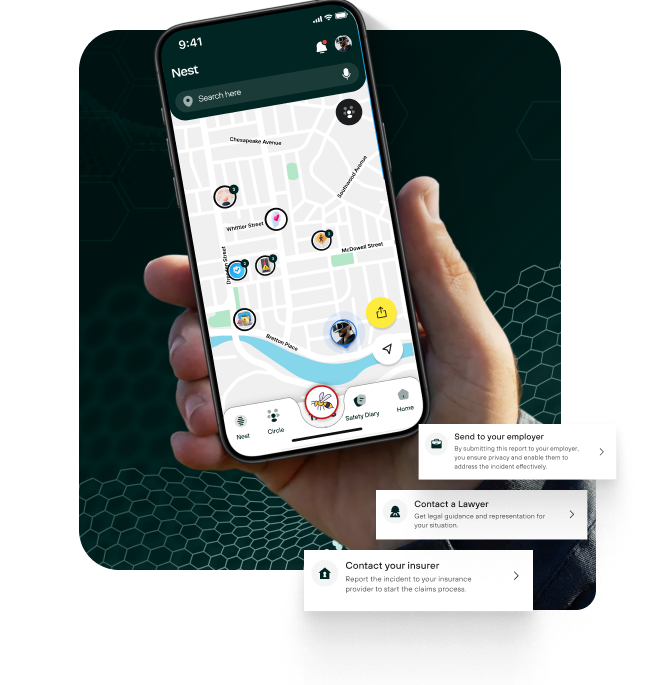
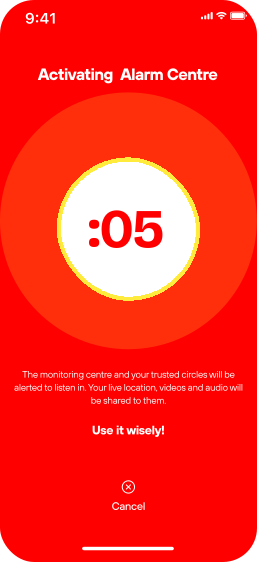
We track risk signals. And
safety signals.
Most tools only talk about danger. We also map what helps people feel safe. Because safety is not just avoidance. It's participation.
Safety is also what works. We want more of it.
What creates tension, avoidance, or urgency. Each signal highlights moments where people feel pressured, unable, or unable to act freely.
The built environment helps you move, rest, and participate safely — pathways, lighting, transit, and public spaces that reduce tension and invite presence.
Visible, trusted people in shared spaces — neighbours, helpers, community members — whose presence makes others feel less alone.
Spaces and cultures where different people feel welcomed, recognised, and able to participate without fear of exclusion.
Environments intentionally designed to prevent harm and encourage positive social interaction through thoughtful planning.
The subjective sense of ease and belonging — freedom from anxiety, threat, or the pressure to perform vigilance.
Protection from online harm, harassment, and surveillance that extends into and affects experiences in physical space.
Moments and structures that give people agency — the ability to speak up, make choices, and shape their own safety.
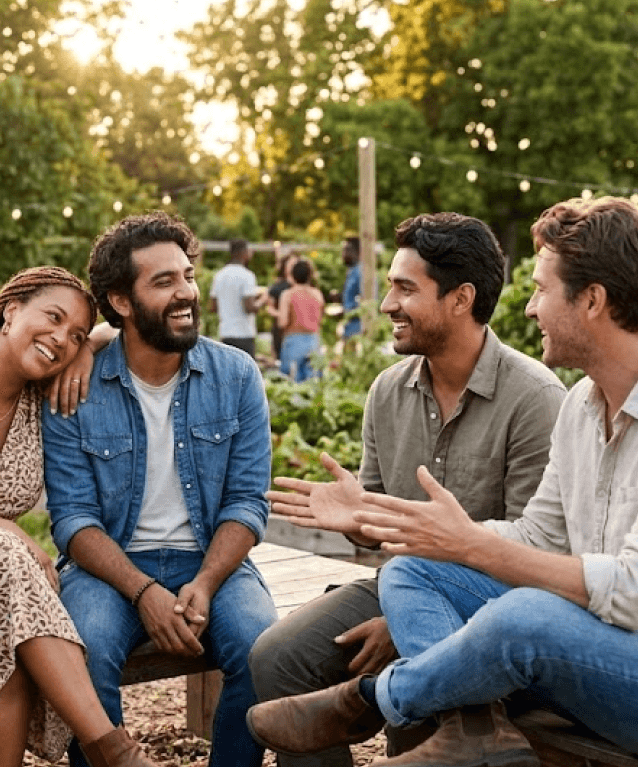
Risk isn't always violence. Sometimes it's design, behaviour, or neglect.
We don't just warn. We shift. We build safer norms.
Issues that limit visibility or awareness. Dynamics like poor lighting, bad street design, and architecture that isolates or exposes.
Patterns of interpersonal behaviour — harassment, intimidation, exclusion — that make spaces feel hostile or unsafe.
Barriers that prevent safe movement — unreliable transport, inaccessible infrastructure, or routes that force exposure to danger.
Absence or failure of systems that should help — slow emergency response, distrust of authorities, lack of first-aid presence.
Chronic stress, hypervigilance, or trauma responses triggered by repeated exposure to unsafe or threatening environments.
Threats from surveillance, data misuse, or online harassment that spill over into physical safety and personal freedom.
Elevated danger rooted in who someone is — race, gender, disability, sexuality — amplified by structural inequalities.

Freedom of movement is the goal.
When safety improves in all of society, participation naturally increases. People go out. Work shifts. Attend campus. Take opportunities. That's the MyHives mission. Everyday safety through solidarity.

MyHives learns from places — not by tracking people.
When signals are logged, MyHives creates patterns based on location, time, and context. These patterns enhance safe navigation and highlight areas needing attention. Privacy is prioritized: no continuous tracking by default, and no organization can monitor individuals. You always control what you share.
FAQ
Can't find answers you're looking for?
Reach out to our customer support team
MyHives is privacy-first by design. Where it makes sense, users can document and share safety experiences in a private or anonymous way. Where support or response requires identification, we only use the minimum information needed to help safely and responsibly. Our principle is simple: people should be able to seek support without giving up control of their data.